
Acrylamide mitigation under control
Reduce acrylamide formation at the source — without compromising quality, taste or process efficiency.
Reliable enzyme-based solutions for bakery and snack applications
Acrylamide is an unavoidable by-product of high-temperature processing, but it does not have to be an uncontrollable risk. With the right enzymatic approach, food manufacturers can manage acrylamide formation in a predictable and product-specific way, even under variable raw material conditions.
Quattro Enzyme Solutions helps manufacturers reduce acrylamide formation in a predictable and product-specific way, without compromising taste, appearance or process efficiency.
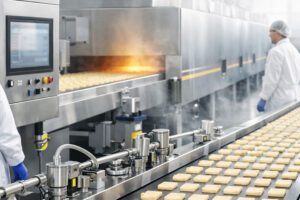
Extensive research on raw materials, enzymes and their interactions lead us to in-depth knowlegde in our industry

Quattro Enzyme Solutions supports bakery and snack producers with tailored enzyme solutions that help meet regulatory expectations while maintaining consistent product quality.
Why acrylamide remains a challenge
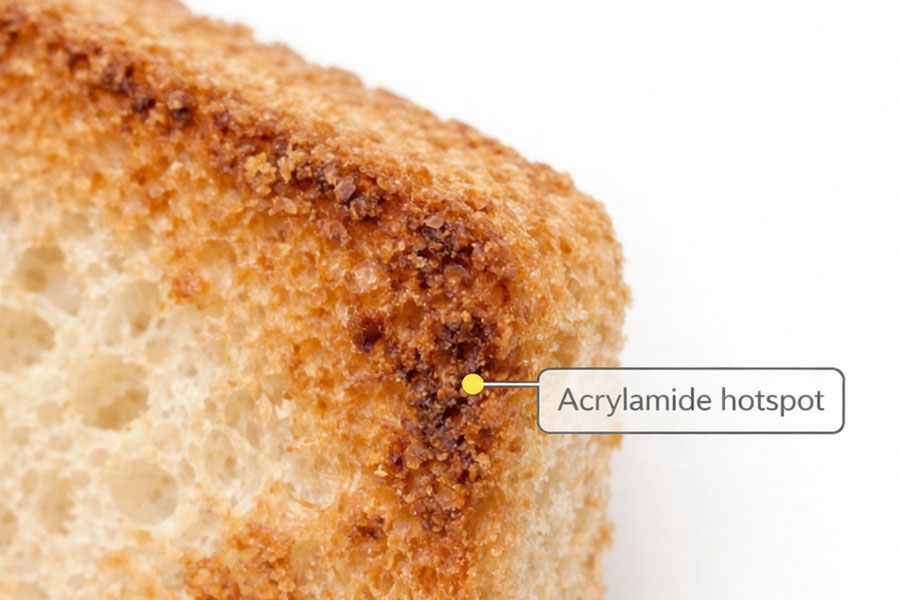
Acrylamide forms during baking, frying or roasting when free asparagine reacts with reducing sugars at temperatures above 120°C. This reaction is part of the Maillard process that creates desirable colour and flavour. While the reaction is well understood, controlling acrylamide levels in practice is difficult.
Natural raw material variability, seasonal changes in cereals or potatoes, and differences in processing conditions can all cause significant fluctuations. Traditional mitigation measures such as temperature reduction or recipe changes often reach practical limits, as they may affect colour, texture or throughput.
That is why effective acrylamide mitigation starts before heat is applied, not after problems appear.
Enzymatic mitigation: proven, targeted and effective
One of the most effective and reliable acrylamide mitigation is the use of asparaginase enzymes. Applied during dough preparation or before thermal processing, the enzyme converts free asparagine into aspartic acid, a compound that does not form acrylamide during heating.
Because this reaction takes place upstream, acrylamide formation is significantly reduced while the desired Maillard reactions responsible for flavour and colour remain intact. This makes enzymatic mitigation a preferred solution for manufacturers who seek both regulatory compliance and consistent product quality.
“Acrylamide control works best when you address the cause — not the consequence.”
The Quattro approach to acrylamide mitigation
Tailored solutions, backed by application expertise
Acrylamide mitigation is never one-size-fits-all. At Quattro Enzyme Solutions, we develop enzyme solutions tailored to your specific product, formulation and process conditions.
Our support includes:
- selection of the right enzyme solution
- guidance on dosage and application timing
- technical support during trials and implementation
- focus on cost-in-use and production stability
As an independent enzyme specialist, we help you stay in control — even when raw materials, regulations or market demands change.
Reliable mitigation starts with understanding your process.
Looking for controlled acrylamide reduction?
Every product and process is different. Our specialists support you in selecting and applying the right enzymatic strategy to reduce acrylamide reliably — without compromising product quality.
Acrylamide formation
Acrylamide forms during heating (>120°C) under low moisture as a side reaction of the Maillard reaction between free asparagine and reducing sugars. Mainly a surface-driven phenomenon.
Typical reduction ranges
Depending on the application, enzyme-based mitigation can achieve typical acrylamide reductions ranging from 60% to over 90%, when correctly applied and optimised.
- Biscuits and wafers: up to 85–90%
- Crackers and crispbread: up to 75–90%
- Potato-based snacks: up to 90%
- Breakfast cereals: up to 80%